The building's look
Eclecticism in full splendour
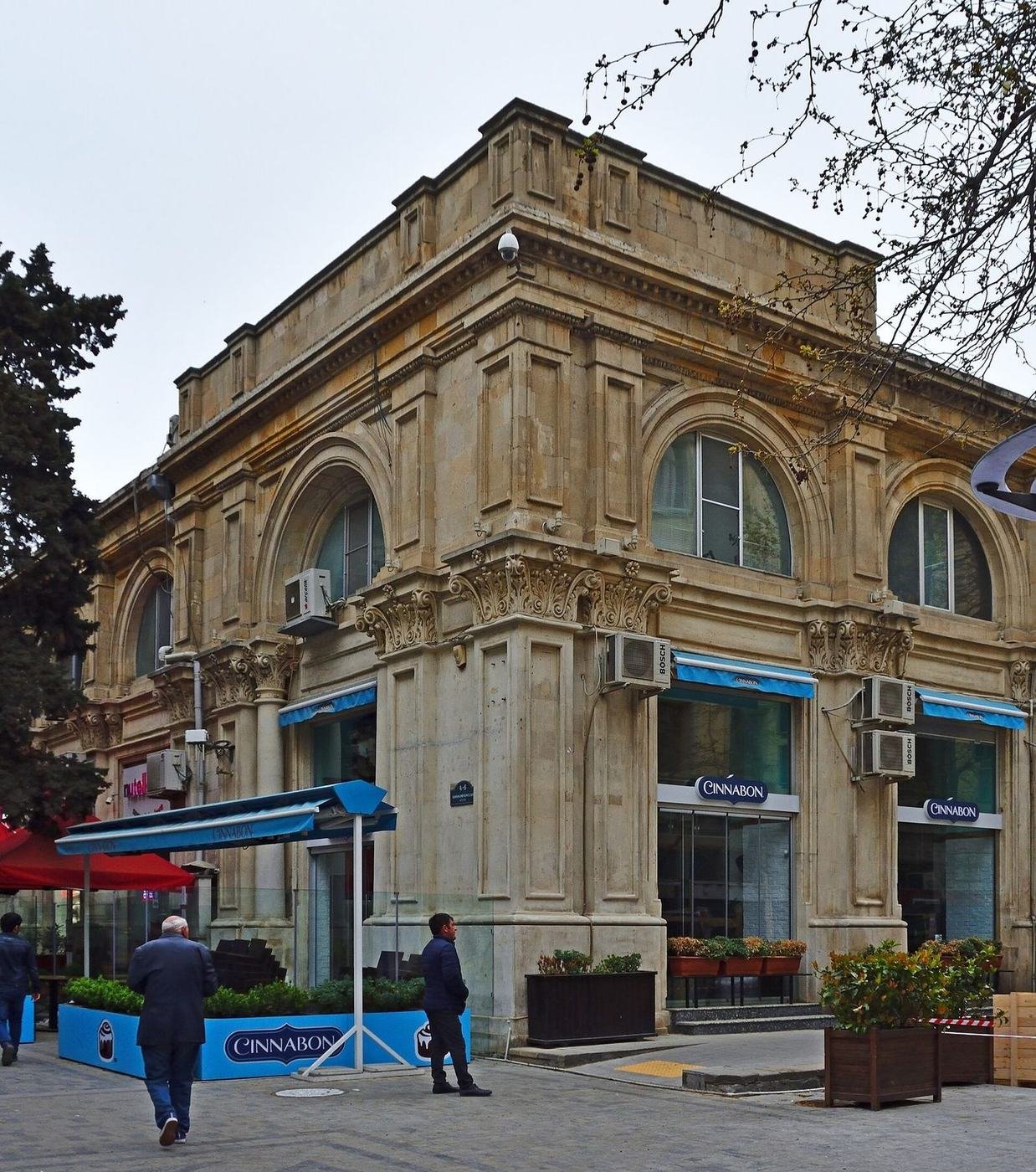
The Passage is built in the eclectic style — a turn-of-the-century fashion that freely mixed classicism, the Renaissance and the Baroque. The architects of “oil” Baku added Eastern motifs, creating their own recognisable style.
The Passage's facades are richly adorned: rows of arched windows, pilasters and half-columns, cornices and stucco. Each tier is conceived as part of a single elegant composition.
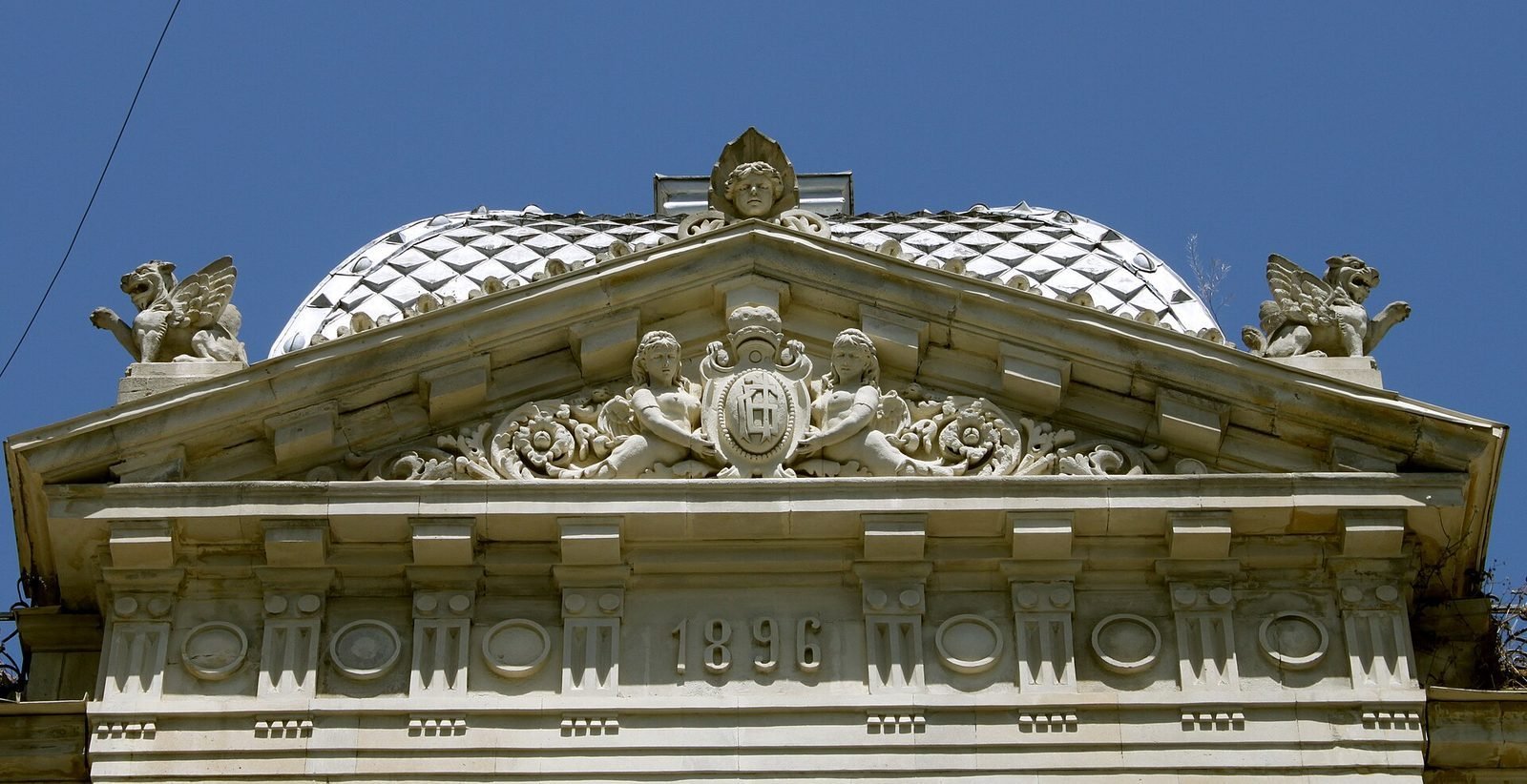
The building is crowned by a figured pediment with a stucco coat of arms, caryatids and winged figures, in the centre of which a date is carved — 1896.
Eclecticism
A free combination of classicism, the Renaissance and the Baroque with Eastern motifs — the style of oil Baku.
Arched windows
Rows of tall arched windows set the rhythm of the facades and let light into the shopping galleries.
Pilasters and columns
Pilasters, half-columns and capitals give the building the solemnity of a palace.
Stucco
Cornices, rosettes and plant ornament cover the facades with fine stucco decoration.
Caryatids and figures
Sculptural caryatids and winged figures on the pediment are a tribute to European classics.
The 1896 pediment
The figured pediment with a coat of arms and the date 1896 is the main accent and the building's “signature”.
 Detail
The detail decides all
Coat of arms, figures and date
The chief adornment of the Passage is its figured pediment. At its edges sit winged griffin-lions, in the centre a stucco coat of arms held by caryatids, and below it the date of construction is carved.
Such details are the language of the era: with them the owners spoke of their taste, their wealth and their belonging to the great European world.